



Rolling Toward a Complete Rolling Chassis
February Newsletter 2026
The road to Michigan continues for FRUCD. Here’s everything you need to know to get up to speed on Davis’s formula racing team this February.
Our February crowdfund, Fueling Our Way to Competition, has concluded. We are excited and grateful to announce that we have exceeded our fundraising target. Thank you, donors, for your generosity and continued support.
In other business news, our annual UC Davis e-week event went off without a hitch! Students interested in the club were invited to a social to create a DIY car model and protect an egg inside it. One student left victorious, with an unbroken egg and a team shirt.
This past month, Suspension finished its minimum viable product (MVP) assembly. They have also begun preparing the rolling chassis, fully assembling the vehicle's frame with suspension, steering, wheels, and brakes. They have also finished manufacturing the anti-roll bars and will be validating these components soon.


FE13’s chassis has returned from powdercoating. Big thank you to our sponsor, Lux Powdercoat, for getting it done! The polyfiber bodywork, floors, and firewall were installed in preparation for rolling chassis. They conducted testing on the car’s torsional stiffness (resistance to twisting) on both the FE12 and FE13 chassis. Chassis also experimented with removing a tube from FE12 in order to quantify its stiffness gain (research on optimizing torsional stiffness).


Wheel Package has completed their work on the upright, wheel hub, and braking system for FE13, which are now ready for the rolling chassis.
Electrical has finished laying out the wiring harness and installed it on the car. They are currently working on crimps and connectors. The subteam has made progress with their telem host firmware by testing the power and programmability on the second revision of some boards.
In February, Aerostructures continued to make strides in the production of the aero package. They applied the polyfiber on the chassis, completing the car's body panels. Composites worked hard to complete a gel coat test, which was a necessary step in manufacturing the carbon fiber components. With the successful test, they were able to complete the layup manufacturing process for the nosecone and dash panel, which are both made of carbon fiber. Aerodynamics produced a miniature prototype of the DRS (drag reduction system) for the rear wing of FE13. They are now working on optimizing the efficiency and downforce of the rear wing endplate contours.

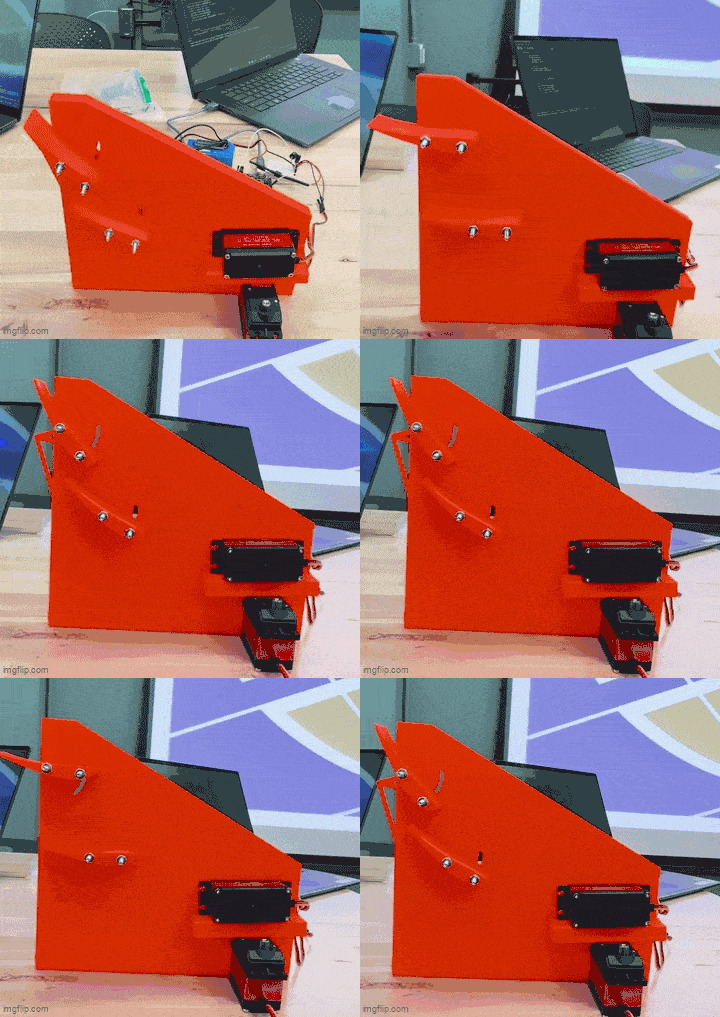
Research conducted by Vehicle Dynamics found the optimal usage speed for the DRS system. More specifically, the simulations they conducted showed that the drag reduction system will give FE13 a competitive advantage at speeds over 30 meters per second, or 67 mph.
Huge steps in manufacturing have been made this month across the team, and we can’t wait to see where next quarter will take us!
